

The second of three sketches translating the Peace Corps experience into crisis survival in Tehran, 1979-1981. John Limbert’s full profile is scheduled for publication in Profiles in Service in 2026.
Ping-pong
John Limbert had been in and out of Iran since 1962. Following his sophomore year at Harvard, he studied Persian in Tehran while visiting his father, on assignment for the U.S. Labor Department and USAID’s forerunner, the International Cooperation Administration.*
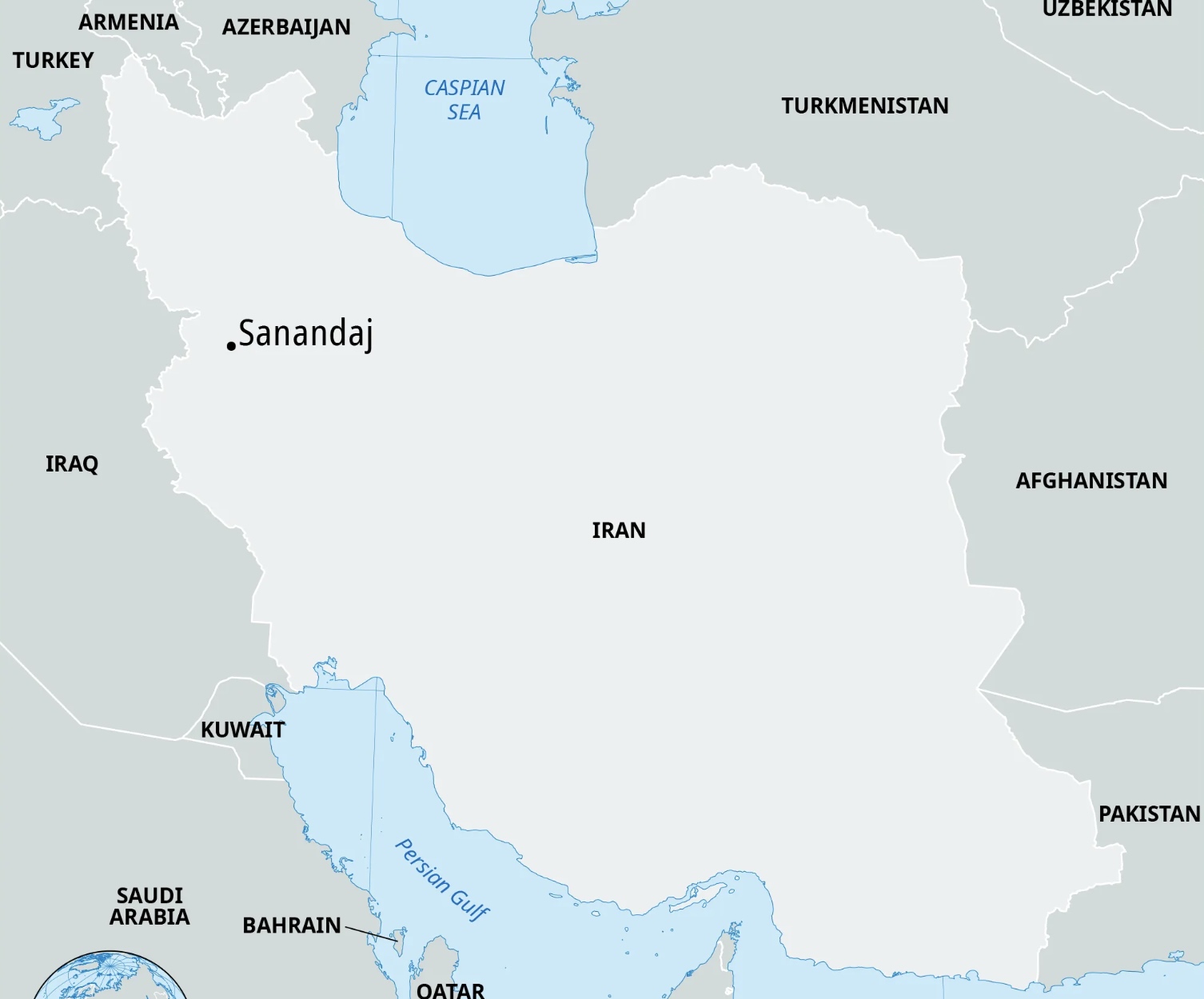
He returned in ‘64 with the Peace Corps to live in Sanandaj, teaching English to restless adolescents. Here the lessons of ta’arof—the courtesies and customs governing almost all interaction, especially the role of host and guest—made their first impressions in what would become Limbert’s lifelong regard for Iranian culture.

Limbert faced 50-60 thirteen-year-olds from provincial towns who jeered at his attempts to teach. He understood just enough Persian to recognize their mockery, if not their precise insults. To call his disciplinary methods “challenged” would be a courtesy.
Ta’arof and Iranian tradition helped level the playing field.
Custom required that his more experienced counterparts take the 22-year-old under their wing and show him the way. Most were extremely kind, nicer than they had to be. A few may have seen him as a threat, his attempts at innovation folly. But ta’arof required that he be cared for, just as Iranians had cared for visitors to their land for centuries.
The courtesy extended beyond school, with Limbert invited into homes and introduced to families.
I found a lot of warmth and welcoming among the people there. And there was really nothing I could do for them. There was nothing in this for them other than being nice. -Limbert
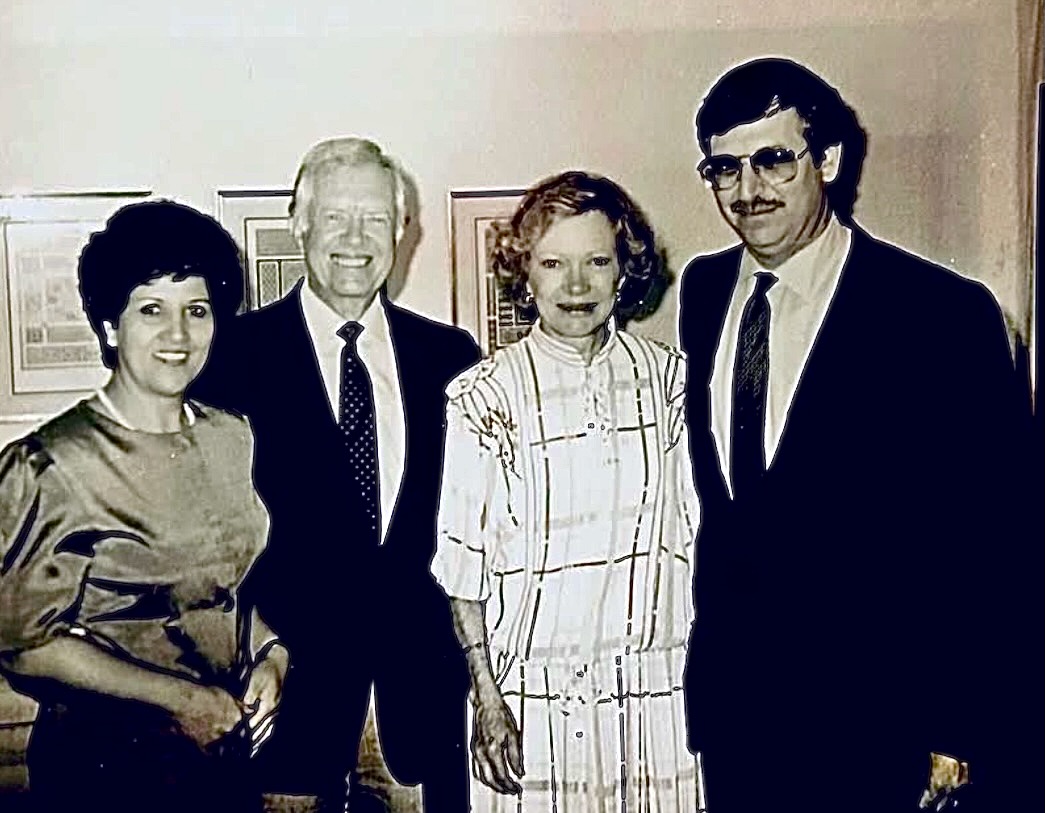
Then something really special happened. During his second year, Limbert encountered a young woman of Kurdish-Persian mix at one of the schools on his circuit. She’d recently returned home to Sanandaj after studying physical education at the University of Tehran, followed by two years teaching PE in the capitol.
Their schedules were such that Limbert would arrive at the school just as she was leaving. As the students wrapped up their sports one day, they challenged Parvaneh, their PE teacher, to beat the American at ping-pong.
She did, but the back-and-forth had only just begun. Eventually, many months later over a game of Backgammon with her father, Limbert made his case for marriage, and before he departed Iran in 1966, the two celebrated their nuptials in Tehran. The marriage forever cemented Limbert’s embrace of Iranian customs.
Ta’arof
Ali Hosseini Khamenei met the American second secretary under strange circumstances.
Here was Khamenei, the Friday prayer leader of Tehran, positioned to shape public opinion and guide his country through revolution.** The American diplomat, by contrast, barely ranked.
In the U.S. Embassy pecking order, he stood three heads below the chargé d’affaires, Bruce Laingen. Laingen had his deputy, who in turn looked to a subordinate—a woman!—to manage the Americans’ political reporting operation. Somewhere beneath her, in this fetid nest of spies, stood Second Secretary John Limbert.
The visit mattered, though. It was an opportunity to show the world just how well the Iranian students were treating their American guests: they had access to health care, regular meals, and recreational facilities. Didn’t they have a library? A collection of video tapes? A ping-pong table? Once a week, they were permitted to shower!
This Monday, April 14, 1980, every one of them would be visited by a team from the International Committee of the Red Cross. They would be served cannelloni for lunch. Iran, and its revolutionary young students restoring the nation to the glory of Islam, had nothing to hide.
Paper Sack
Limbert saw things differently. For the past five months—162 days—he’d been held against his will, incommunicado, frequently in solitary, at times interrogated, always the psychological torture of twin uncertainties: How much longer would this go on? And how were his wife and young children holding up at the U.S. Embassy compound in Jeddah, Saudi Arabia?
Limbert endured long bouts of boredom and loneliness punctuated by sharp moments of real strain. He’d entertain himself for long stretches by setting pistachio shells into football formations on the floor and playing out the matches. The droll moments were interrupted by interrogation and mock execution. Under other circumstances, the cross-examinations might have been comical, Saturday Night Live-type skits satirizing bumbling criminal masterminds.
Shouldn’t it be Limbert, not his inquisitor, with the paper bag over his head? Why flail about blindly putting questions to their prisoner when the answers they sought—the names and addresses of his Iranian contacts—were right beneath their noses in Limbert’s rolodex?
But Limbert engaged his captors personably. He wanted them to see him as a human being, an individual, which was how he saw them. He viewed them in the same light he’d come to know his students in Shiraz as a professor from 1968 to ’72, slightly older versions of the high schoolers he’d taught during Peace Corps service before that.
No saint, Limbert also preserved his sanity with small acts of defiance. He kept his back turned on one of his captors whose violations of Iranian custom governing civility demeaned Limbert’s adopted culture. He drew up cartoons contrasting the ideal Islamic state, as laid out in the Koran, against Iran’s present reality and the barbarity of holding “guests” against their will.

That Monday, Khamenei swept into Limbert’s room looking very much the cleric he was: fully bearded, dark muslin robe over a drab jubba, and black turban. His thick glasses gave the forty-something a bookish, gawky appearance. With him was Iran’s minister of health, and a camera crew.
The Great Kindness was about to begin.
Killing with kindness
When Khamenei entered Limbert stood to greet the delegation. Here, where he spent his days in solitary—save for his pistachio shell football players—he now found himself interacting with a cleric not much older than himself.
Without thought, camera and microphone recording, the two men stepped into their roles under the unwritten rules of ta’arof.
Iran may have been Khamenei’s turf, but he was a guest in Limbert’s space. As host, Limbert had certain obligations, as did Khamenei, the guest. Limbert insisted Khamenei be seated. He ruefully acknowledged he had no food or drink to offer, an egregious shortcoming. Khamenei waved-off the breach. The interaction continued in Farsi.
“Do you have any problems?” Khamenei wanted to know.
“Sir, not really.”
“Do you have any issues with your conditions? The food and hygiene, access to books? Are there any shortcomings or difficulties to be removed?”
“No sir, not really.”
“Is there anything at all that you are missing?”
“I really have no complaints,” Limbert said. “Except one.”
“And what is that?”
“My complaint is: We are here. And that is a problem.”



Unfazed, the cleric responded evenly. “If the oppressive rulers of the world would wake up, and come to an understanding, that problem would be solved. Inshallah the Iranian criminal, the shah, will be delivered to Iran and the hostages will be free to go.”
“Inshallah,” replied Limbert, not disagreeing with Khamenei’s views on the exiled Shah Mohammad Pahlavi Reza. “But I think we have a different understanding of who the oppressive leaders of the world are.”
The barb appeared not to sting Khamenei, and Limbert went further. “There’s one more thing. Iranians are very hospitable people. In your culture, a guest comes and the host does not want the guest to leave. The guest wants to leave, the guest must leave, and the Iranian host will say “Oh no, it’s too soon! You must stay longer.””
Khamenei nodded, the departure role play a familiar custom.
This politeness, sir, has to have limits. It can be overdone. And I think, in this case, our hosts here have overdone it. They have kept us beyond what is reasonable. And too much hospitality can be annoying. -Limbert
Whether or not Limbert’s dripping irony shamed Khamenei is an open question, but he would have recognized it. Limbert had cut off the man’s head with cotton.
His poise, broadcast on Iranian TV and around the world, leveraged Khamenei’s own culture into a polite message discrediting him and the students holding Limbert captive. He and his colleagues would be held for nine more months, released on January 20, 1981, after 444 days in captivity.
Limbert would remain free until 2003, when he was held against his will once again, this time in Iraq.***

Read more from Limbert’s oral histories with the Association for Diplomatic Studies and Training:
View from wife Parveneh Limbert
To follow Limbert’s and other diplomats’ stories from the forthcoming Profiles in Service, consider subscribing below. And please share your thoughts in the comments section. Thank you.
##
*As an acronym, ICA played poorly in Iran, where in 1953 the CIA helped manifest a coup against democratically-elected president Mohammad Mosaddegh in favor of Shah Mohammad Pahlavi Reza
** Kahmenei would succeed Ayatollah Ruhollah Khomeini as Supreme Leader in 1989, a position he holds today
*** His time restoring looted antiquities to the Iraqi National Museum immediately after the U.S. invasion is recounted in full in his oral history and dramatized in the forthcoming Profiles in Service
 Ben East Books
Leave a comment