

Like any sad scribe I’ve kept my nose to the grindstone of my latest project.
Let me interrupt that pace to say with heartfelt sincerity and apolitical sentiment that my thoughts are with my fellow diplomatic colleagues serving near and far at a time of falling bombs.
Ditto for all the U.S. intelligence, military, and security officials who stand at present in harm’s way.
Most of all, I’m thinking of the families of those selfless state workers, some of which had to evacuate their country of service by land to catch passage to domestic soil for an unknown duration. Not “home,” for home is thousands of miles away. Six-month-olds, three-year-olds, moms with sagging clothes packed with snacks to keep the shocked and disrupted young on track.
And these are the “lucky” ones. For yes: I also feel for the victims and the targets of the arsenal assembled against them as I do for all humanity watching this unfold.
Diplomats and Support Networks in Action
I leave out the specifics of what I observed today, mindful of maintaining the anonymity and operational tempo of those involved. Let me just say to all those in the wilderness right now: good people here are helping in unseen ways, playing any role they can to ease your sudden burden.
My son asked at dinner tonight if hearing about evacuation flights reminded me of the pandemic, of chartered flights to help Americans get home before the global air space shuttered.
A good question, an insightful one. More than I would have thought of at his age. But the answer was, “No. It reminds me of being evacuated early in my career over threats during the so-called war on terror.”
Put another way, my colleague and senior diplomat Ryan Gliha shared a summation of the work diplomats do as war unfolds around them. Click the image below to find out.
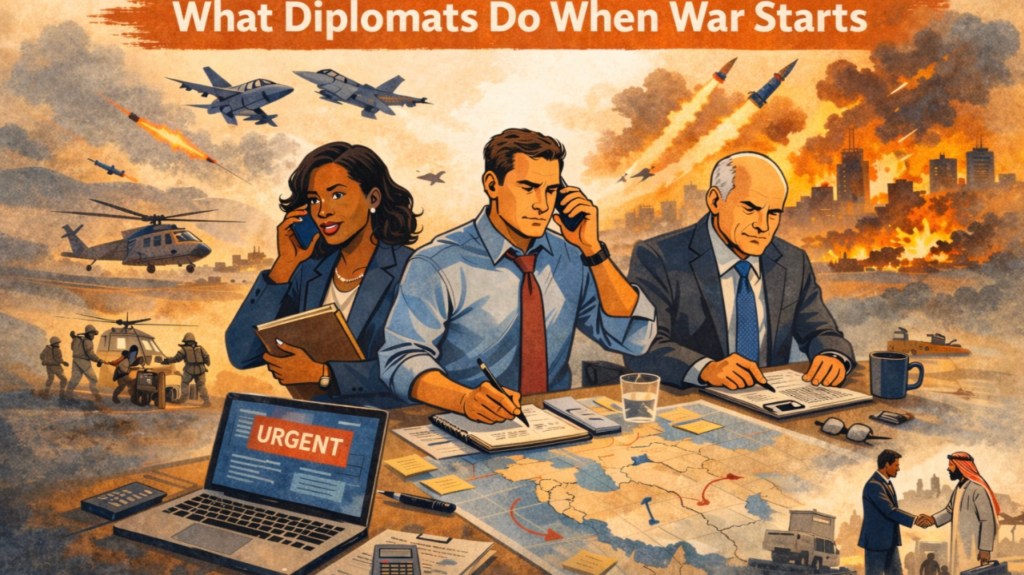
In the first hours of a crisis like this, there’s another group that moves fast, quietly, and relentlessly: diplomats.
I’ve been in the room (and the blast radius) when events turn in minutes. In Beirut during wartime evacuation operations. In Yemen in the aftermath of an embassy attack. In Doha during the Gulf crisis. In Jeddah when I survived a terrorist bombing in 2020. And in Washington, building the systems that help institutions make decisions under uncertainty.
Here’s what diplomats would be doing right now—while the world refreshes headlines.
Question
The only thing left to be answered now is: “Why?”
Not, “Why serve,” because the answer is: “Duty.”
It’s “Why war and why now?” The answer is far from clear.
I wanted to share this recognition of others’ service, this recognition of others’ misery, before resuming my regularly-scheduled, tunnel-vision programming on Peace.
For which I apologize in advance.
##
Featured image licensing information: https://creativecommons.org/licenses/by-nc-sa/2.0/
 Ben East Books
Leave a comment