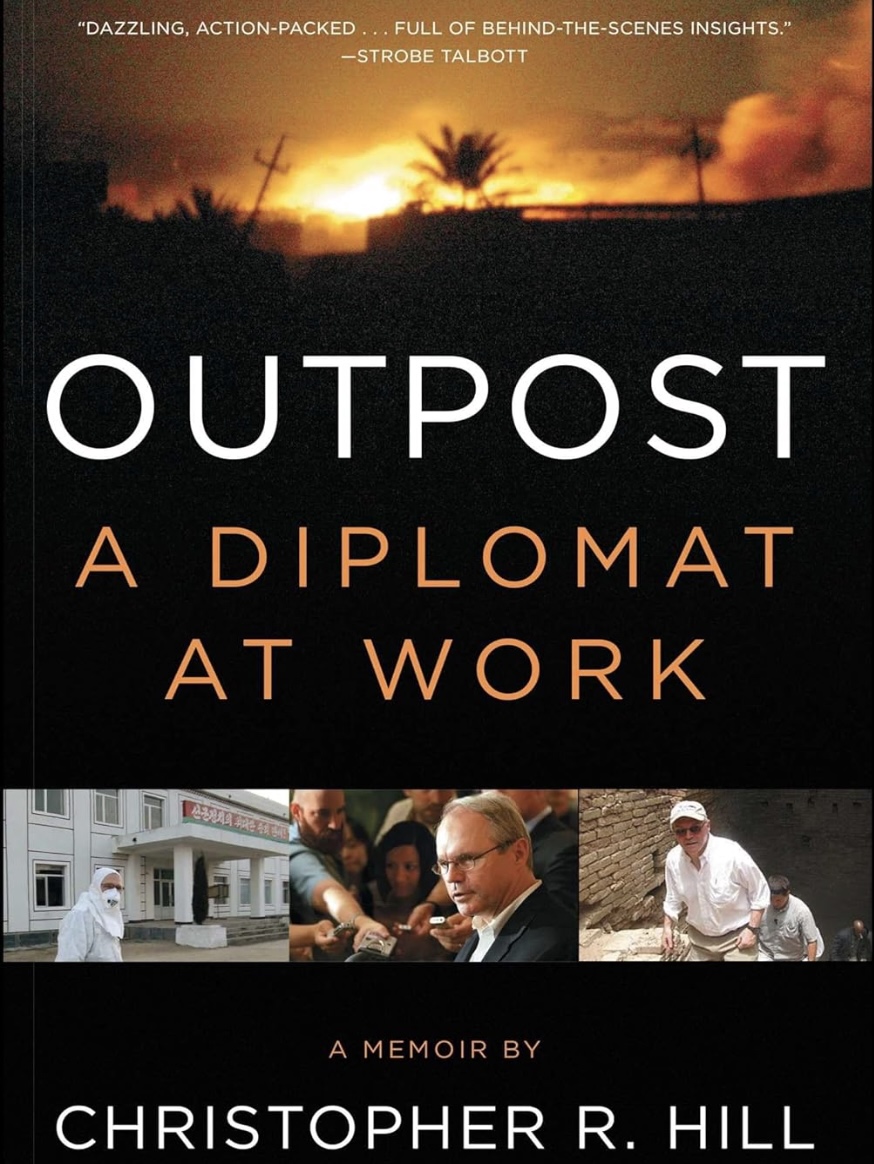
I interviewed all the diplomats featured in Profiles in Service: Peace Corps Roots in American Diplomacy except one. The profile of Christopher Hill, the only active-duty ambassador in the cohort at the time of my research, emerged largely from his compelling, honest, and vivid memoir Outpost: A Diplomat at Work (Simon & Schuster, 2014). We never managed to connect in real-time, though we communicated by email. In the end, his book provided a clear case and the details for his narrative.
Co-op
Before leaving his house in Buea, Southwest Cameroon that Sunday in March 1975, Chris Hill reviewed the report he’d prepared for the annual general meeting of the credit union he helped administer.
Generally positive as to the institution’s financial health, his findings included a troubling governance issue he aimed to raise: the board of directors, it seemed, were abusing their access to funds contributed by the 600 members, mostly women tea pickers.
He locked the door to his concrete-and-cinderblock house on a remote plot of dusty grass and mounted his 125cc Suzuki. Kicking the bike to life, he buzzed down the side of 13,000-foot Mt. Cameroon, following a familiar dirt track through the rainforest, a trail like those he’d covered for the past half year visiting all 28 credit unions he audited each month.

Hill emerged from the forest, the landscape opening on vast acres of tea bushes, row upon row in emerald tiers on the hillside. He made for a clearing on the slope where credit union members were setting out plastic chairs, the smell of grilling meat wafting from a fire.
The meeting opened with the usual formalities, the 12-member board seated and facing the others to render their reports. For his part, Hill updated the membership on the health of the credit union, including his concern: half the institution’s loans had gone to just 12 members—the board of directors—with the remaining half disbursed among more than 600 individuals.
Such a concentration in borrowing, Hill said, indicated an abuse of authority, a view which the Cameroonian government also held. The board looked on, gloomy and muttering. Hill was destroying the union.
Members of the general body stood and raised their voices. They supported Hill, became animated by his report. Encouraged, he recommended action, suggesting they elect a replacement board and nominating 12 members he thought would make suitable leaders.
An early election
The vote would be public. Both candidate slates stood before the membership, the old board stern and peevish, the replacement board sheepish. Unhurriedly, chattering like guests at a picnic, the members lined up behind the board of their choice.
The result was a landslide: just 10 percent stood by Hill’s replacement board.
Nobody appeared to take it hard. Hill shook hands with both slates and kept things light. He stuck around, heard words of appreciation from the members, and enjoyed some beef and soda. The young volunteer managed to keep a façade, pretending nothing had happened, then made his exit.
In truth, he stung. Worse than the result, Hill recognized he really didn’t understand what was going on with the credit union, asked himself what he’d missed, what he might have done better to understand the dynamics and relationships of the place.
Had he talked to enough sources or just people who agreed with him?
How could I have been so misled to believe that people genuinely annoyed with their leaders would have illogically, at least in my view, voted to put those same leaders back into office?
Had he chosen the wrong replacements? Could he have identified another group?
None of the above, he concluded. “I just needed to accept the fact that I didn’t understand the place, that I had really overstepped my authority in thinking I could unseat an elected leadership and impose another.”
He resolved never to make the same mistake, to never again impose his choice of leadership on others.
The first question I had asked myself when I saw the problem at Tole was how to get rid of the board. The question I should have asked myself first was how that board got there in the first place.
The Kosovars
Nearly a quarter century later, as U.S. Ambassador to Macedonia, Hill took a call from Secretary of State Madeline Albright. She asked him to saddle up again with his old negotiating partner, the late Richard Holbrooke, to bring the Serbs and Kosovars together on a deal that would bring peace to the Balkans.
Hill spent the year shuttling around the region, to Rambouillet, France, producing reams of draft agreements, and just as many rejections by both parties. Civilian suffering continued on both sides. By March ‘99, with a firm “No” out of Serbian President Slobodan Milosevic, Hill would leave Belgrade for the last time before NATO’s bombs started falling.
Unable to resolve the matter peacefully, Hill took comfort in two break-through moments. The first took place on a rugged mountainside, where Hill got confirmation that an Albanian Kosovar refugee had indeed returned to his home thanks in part to Hill’s direct intervention with Milosevic.
The second occurred inside a 14th-century turreted château near Paris. Throughout the process in Rambouillet, the three-party Kosovar delegation had remained as intransigent with each other as they had been with their Serbian counterparts.
In the final hours, Kosovo Liberation Army representative Hashim Thaci went silent; Kosovar President Ibrahim Rugova showed no sign of stepping up. Hill and his EU partner, Wolfgang Petritsch, made their final plea in an ornate room with granite and wood paneling embellished by rich tapestries.
A tinny cell phone ringed, mocking Hill’s pitch, and he left the room in disgust.
Half an hour later, the door of the delegation room opened and out stepped Veton Surroi, representing Kosovo’s independent-minded Pristina intellectuals. The Kosovars had asked him to speak on their behalf in accepting the Rambouillet agreement.
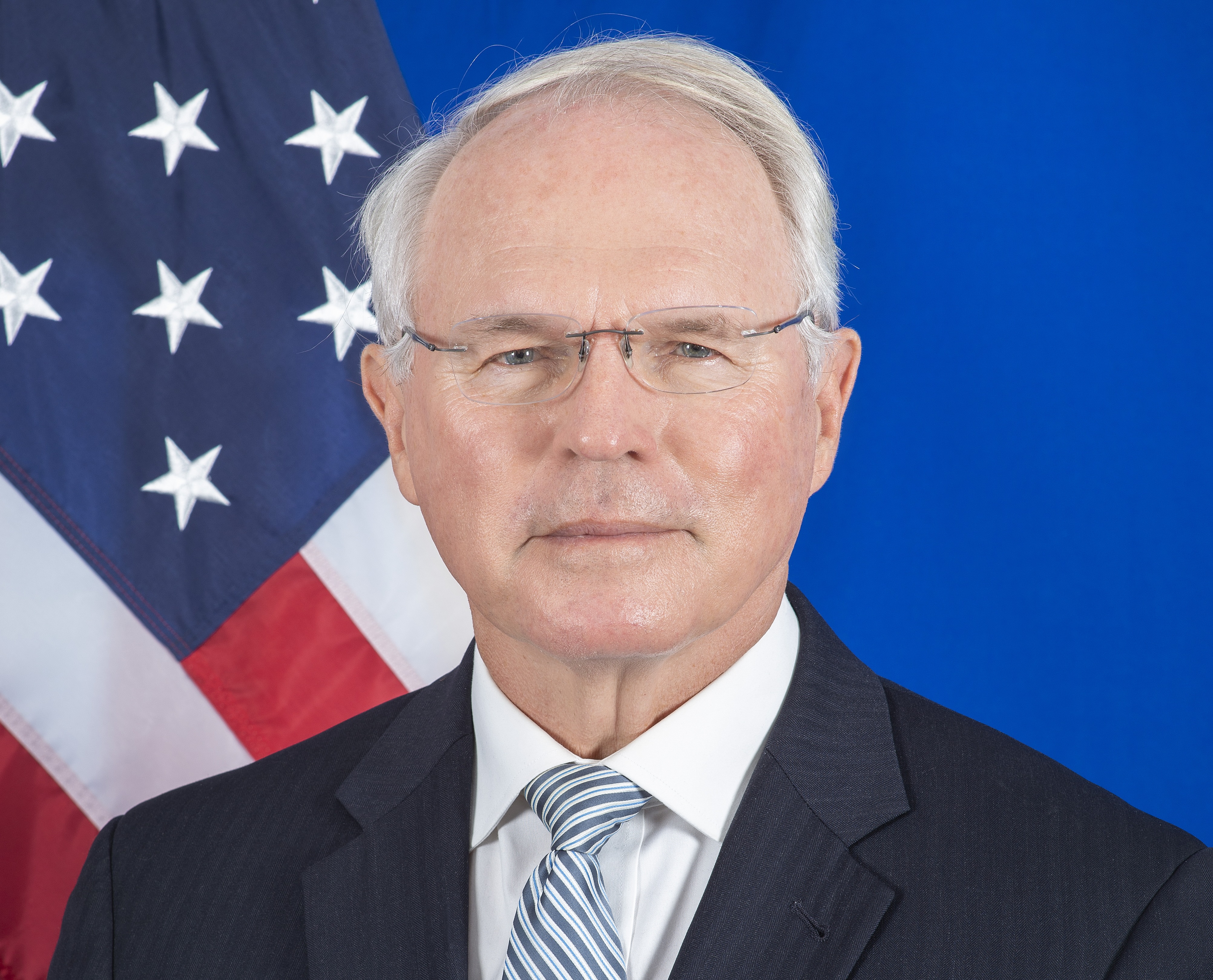
That the pact ultimately died at Milosevic’s hands hardly mattered. Since the Peace Corps, Hill noted, he’d understood how fraught the process of picking someone else’s leadership could be, and he’d seen it fail time and again. In Rambouillet, the Kosovars had chosen their own leader and would continue to do so in elections to come.
To follow Hill’s and others’ stories from Profiles in Service, consider subscribing below. And please share your thoughts in the comments section. Thank you.
##
 Ben East Books
Leave a comment