

The first of three sketches translating the Peace Corps experience into crisis survival in Tehran, 1979-1981. Victor Tomseth’s full profile is scheduled for publication in Profiles in Service in 2026.
The Thirteenth Century
Everything associated with the Peace Corps held fascination for Victor Tomseth in February 1964. Ticket in hand, he’d tell hometown folks in Oregon’s Willamette Valley he was off to Nepal.
They’d scratch their heads and say, “Nepal? Where’s that?”
“Oh, I know! Nepal. South of Rome.”
Spring in D.C. soon livened the GW University campus where Tomseth studied Nepali for two months. The coursework was experimental as much for the forty trainees—including future U.S. Ambassador to Armenia Peter Tomsen—as for the instructors. They studied mimeographed sheets developed as they went. Tomseth hunkered down, his first time really learning a foreign language.
After another month in Hawaii, they boarded the legendary Pan-Am One: Tokyo, Hong Kong, Bangkok, Rangoon, and the hottest landing yet, Calcutta where a Royal Nepal flight carried them to Kathmandu. There, Nepali officials and Peace Corps Country Director, Everest-climber Willie Unsoeld, provided in-country orientation.
A USAID official wagged a jaded finger and described his five years in Nepal: “What you young people must understand is that in the 1950s Nepal rushed headlong into the 13th century.”
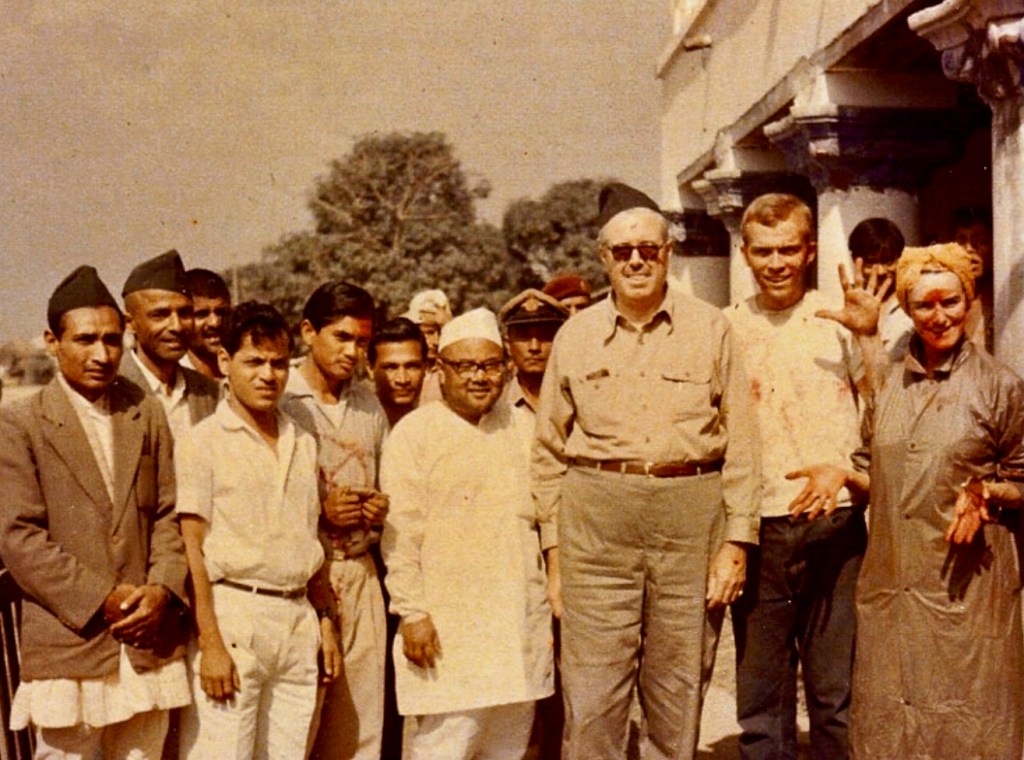
Days later, Tomseth, prior-service Marine and former teacher Dan Pelzer, and Burt Lazarus flew down to Biratnagar on the border with India and settled in Dharan.

They set about making contact using moderately functional Nepali, Pelzer at the college, Lazarus and Tomseth at the boys’ high school.
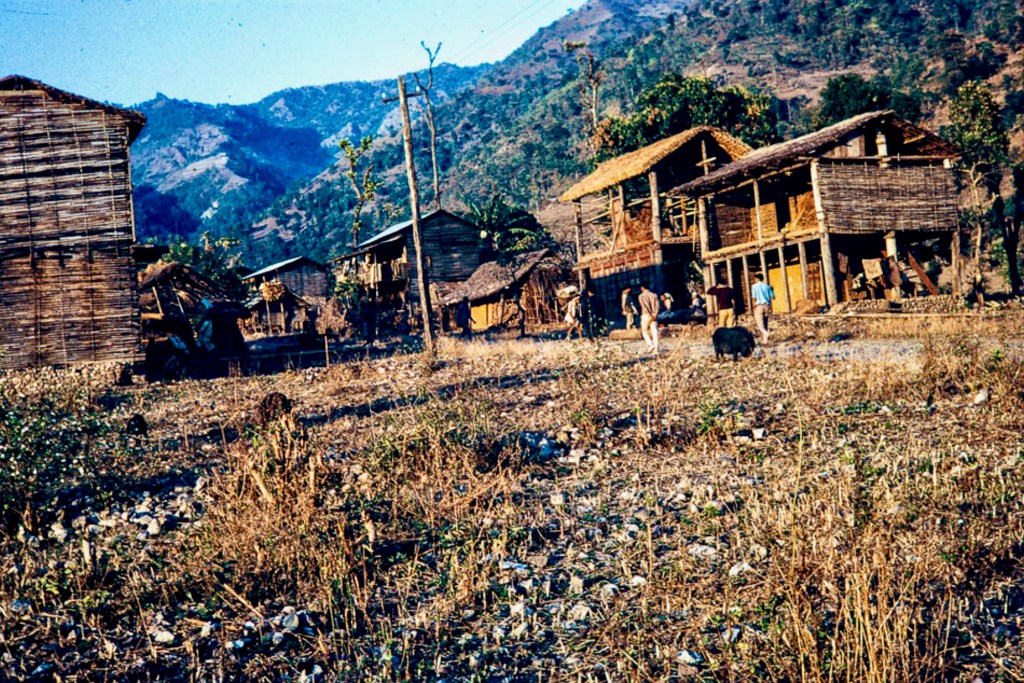
The unelectrified town at 1,000 feet, overlooking rice paddies stretching across the Gangetic plain, followed an idle pace. Mail arrived weeks late, another form of time travel: three months might pass before the response to a letter home. Delays of Time, Newsweek, and U.S. News and World Report meant catching up on developments months after they were first reported on the shortwave.
Visitors dropped by, including Ambassador Henry Stebbins and his deputy Harry Barnes.* Both made an effort to visit the 100 volunteers in country, hosting them for dinner when in Kathmandu. Stebbins encouraged foreign affairs careers, and a number of volunteers, Tomseth included, took the Foreign Service Written Exam at the embassy.
Boredom
What started as novelty became routine. That USAID old-timer was partly correct, and the 13th century sure could be dull!
To stave off boredom Tomseth learned chess from Pelzer, played long, slow matches. He built relationships with the faculty, some of them avid chess players, and spent long afternoons at the tea shop. When the cinema fired up its generator, he took in four-hour Bollywood films with their familiar plotlines: romance, melodrama, colorful costume changes, choreographed fights and splashy dance routines.
He dug out his Nagari notes and studied Nepali. More important than growing proficient, he learned how to study, how language acquisition worked for him. Using the local language mattered, and mastering Nepali set him up to absorb still more complex languages later in life: Thai, Farsi, and Lao.
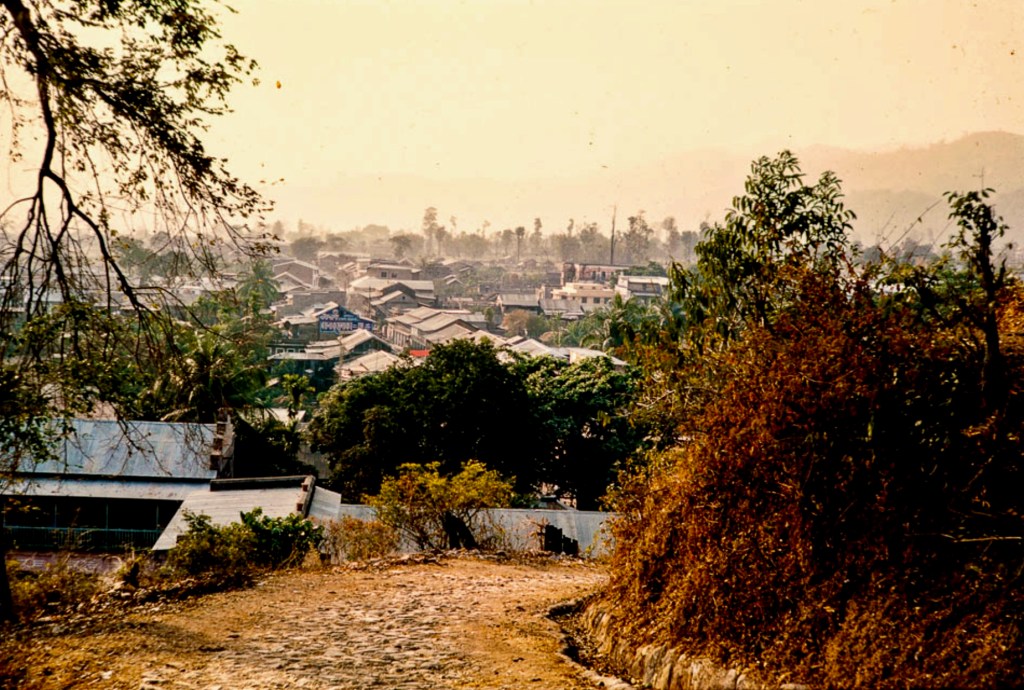
Huddled over his writing table, he blocked out the bustling humanity forever at the edges: a jangling radio, the splash of water from a tap, cartwheels creaking in the street, clopping hooves, goats and chickens, the morning rooster, life’s audible chaos amplified by the absence of electronic appliances. The air was heavy with cloying smoke from the indoor chulo warming naan or heating tea or sweet porridge and lentils.
The usual balm for boredom, satisfaction in purposeful work, eluded him. As sons of the upper caste in the area’s largest town, Tomseth’s students showed little interest in learning. Caste, not education, determined their future. He prepped for class with dread and tedium. Fifty boys crowded onto rough wooden benches, caring not a lick for what he said. Only one question mattered: Will this be on the test? If so, let me regurgitate; if not, let me forget.
Rote memorization, stifling classrooms, poor discipline and spotty attendance, rampant cheating abetted by bored faculty all nurtured malaise… Tomseth’s initial reaction to the apathy was outrage. “By God, we’re going to run our classes differently!”
He got no traction, the system too ingrained. He went through the motions, taught as seriously as he could. He identified the few students interested in actual learning and worked with them outside school hours. He coached them with the same focus he used to learn Nagari: what might be helpful after they finished school? What would enable them learn, independent of a teacher?
Some did finish school, passed the exam, went on to college in the national system. Before he left at Christmas, 1965, Tomseth learned he’d passed the Foreign Service exam.
Tehran
As protestors overrun the embassy on November 4, 1979, Chargé d’Affaires, a.i. Bruce Laingen and his deputy, Tomseth, are wrapping up negotiations at the foreign ministry. They depart with security agent Mike Howland, an Uzi in his lap. Chaotic mobs fill the streets on the anniversary of a tragedy: the now-deposed shah’s forces had gunned down five students at the University of Tehran the previous year.
Over the radio, Howland’s boss describes hundreds of students pouring through the embassy gate: “We need help!” security chief Alan Golacinski urges.

The three return to the ministry and race up the stairs. Foreign Minister Ebrahim Yazdi insists the Americans leave at once. “You can’t stay here. It isn’t safe!”
Laingen objects. “Our only safety is in your hands. You have an obligation to protect us.”
The Americans work the phones with State Department officials in D.C., reporting 66 personnel bound and blindfolded. Nine others are in the wind.
That first day and for several days to come, Tomseth keeps in touch with a Thai chef employed by three officials of the U.S. International Communications Agency. Figuring the situation will resolve quickly, Tomseth needs just a couple days’ cover for the Americans in hiding. To evade eavesdropping he uses fluent Thai, learned during his first Foreign Service tour.
Somchai Sriweawnetr agrees to help immediately, installs the Americans in one of the three houses he works at. Days later, the Students Following the Imam’s Line hunt door to door, embassy files narrowing their search. They knock at one of Somchai’s workplaces.
“Where are the Americans!”
“As far as I know, you have them all.”

The SFIL linger, suspicious. Somchai holds fast. After they leave, he tells the Americans it isn’t safe. Consular officer Bob Anders calls his Canadian counterpart, John Sheardown, who agrees to help. Somchai moves them to safety and reports back to Tomseth.
Prisoners at the Ball
Ministry staff settle the trio in the diplomatic reception area, crystal chandeliers and elegant French furniture in a gilded ballroom. Tall windows line one side. In an ante room, MFA staff monitor TV news reports, Tomseth watching with them.
Days go by. A pattern emerges.
At first Tomseth keeps busy with Washington, no expectation of privacy. A young ministry worker rushes in: “Ambassador Laingen! You must hang up! We’ve run out of tape!”
All too quickly, the hubbub settles down. A failed effort to bring in negotiators marks a decline in the prisoners’ relevance. A kindhearted protocol staffer provides socks and underwear. In cold water they wash their old socks and underwear. These they wring out and hang to dry from the crystal chandeliers and overturned Duncan Phyfe furniture legs.
The real challenge becomes getting up in the morning.
“How do I get through another day? What do I do to fill the time?”
When the first box of books arrives, Tomseth looks for titles and authors of interest. Soon enough, he seeks only the thickest volumes, author and subject be damned. Reading passes increasingly boring days.
They develop exercise routines: calisthenics, the stairs, pace the creaking floors, back and forth and around the table. For two months, they take cold-water splash baths in the sink.
They sleep on sofas in wrinkled clothes, stir around nine after fitful rest. Tomseth listens to the 2pm Farsi radio broadcast and breaks down the gist for Laingen and Howland. The chief of protocol visits most days, stays an hour. Servants appear with tea, meals, to watch TV, the 8:30 broadcast. They bed down around midnight to another lousy night’s sleep. They get up, do it all over again, haunted by guilt, irrelevance, dread.
Boredom.
In January, the Canadian caper spices the routine. From Laingen’s memoir, Tie a Yellow Ribbon:
“Vic Tomseth maintained telephone contact with [the Canadians] at the outset. During Ambassador Taylor’s several visits, he paced the floor with us, out of earshot of our guards, he keeping us aware in general terms of his cable exchanges with both Ottawa and Washington, and we offering our own ideas, on a plan for the Americans’ departure from the city.”
On January 29th, the Americans flee Iran posing as a Canadian film crew.
Mid-February, the ballroom prisoners finish a 3,000-piece jigsaw puzzle.
The day before spring, Nawruz in Iran, they’re permitted to use a fifteen-by-twenty-foot terrace and step outside for the first time in four months.
The crisis drags on. The crisis drags on another ten months. Three more seasons, April’s failed rescue operation, the summer heat, September’s start to the Iran-Iraq War, birthdays and a family death. Another Thanksgiving, Christmas, New Year. The crisis drags on.
Laingen reflects:
“Vic, quiet and thoughtful, is our constant source of knowledge about this country, this culture, and what makes it tick; he served four years in Iran, plus a stint in Nepal as a PCV. Perhaps for this reason and his capacity to speak in their language, Vic has remained remarkably civil and courteous throughout with the local staff, whereas I have retreated into a pattern generally of ignoring them after a curt “Salaam” at the start of the day.”
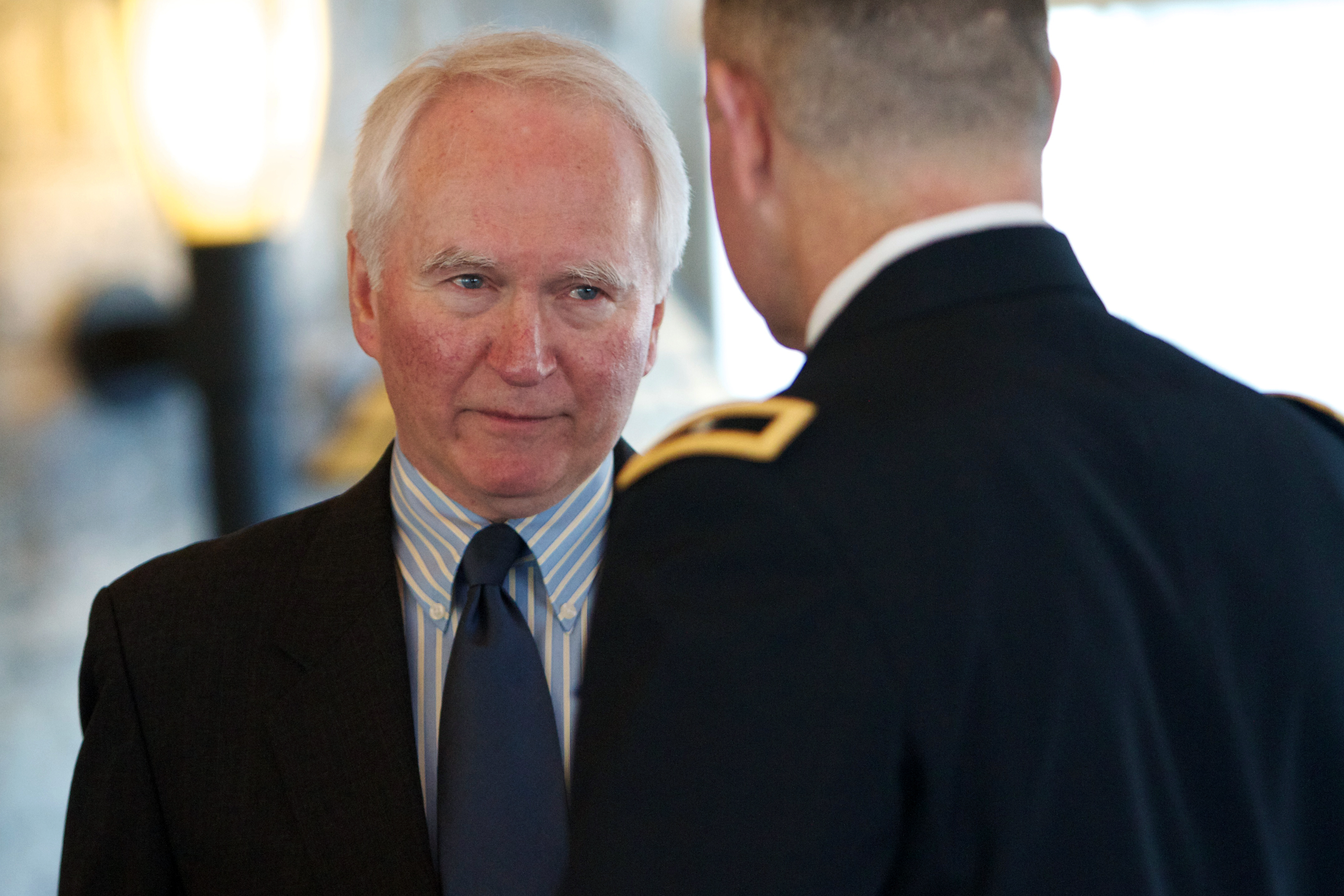
* Stebbins served as the first U.S. Ambassador to Nepal, 1959-66. Barnes would serve as DG of the Foreign Service from December 1977–February 1981, leaving the role three weeks after the Iran hostage crisis.
More about Profiles in Service (Arlington Hall Press, 2026).
Further reading at the Association for Diplomatic Studies and Training.
 Ben East Books
Leave a comment