
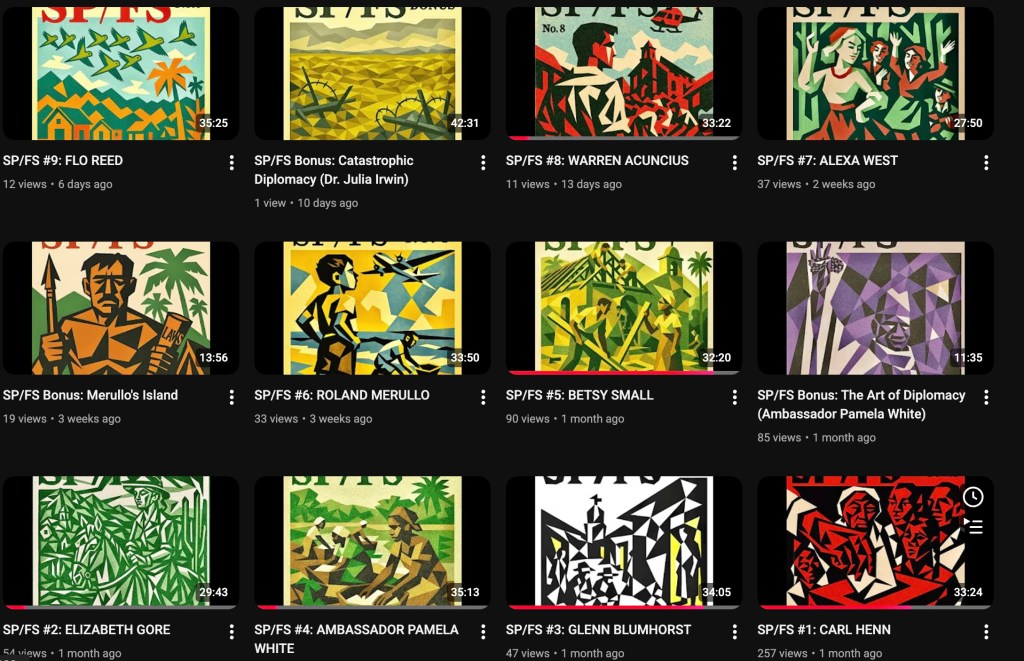
The latest episode of SoftPower/FulStories features Persian scholar, former U.S. Ambassador & American Foreign Service Association president, and Returned Peace Corps volunteer John Limbert.
Limbert narrates his early years growing up in Washington, D.C., his flailing attempts to learn Russian at Harvard, and on to his service as a volunteer in Iran where he finally came to master Farsi.
During his second year there, Limbert met a young woman of Kurdish-Persian mix, the P.E. teacher at one of the schools on his circuit. He lost to Parveneh at ping-pong, then made his case for marriage to her father over a game of backgammon.
Before departing Iran in 1966, the two celebrated their nuptials in Tehran, a marriage that cemented Limbert’s embrace of Iranian culture and customs.
When the call came from the State Department seeking diplomats willing to serve in Iran, Limbert stepped forward and found himself in a country boiling over with revolutionary zeal. What was it like?
“If it had just been the clerics, it wouldn’t have succeeded. But they got the left involved because one of the platforms was anti-Americanism. They got the sort of secular nationalists involved because they were anti-shah and the corruption and the inefficiency of the of the monarchy was obvious. So they were all things to all people. And so when the shah finally fell and the revolution was victorious, maybe they had the support of 95% or 90% of the population.”
“Universities were the enemy. The elite, the intellectuals, the universities, you know, the gender equality, all of that. That was the enemy. And he (Khomeini) wasn’t shy about saying that.”
-Limbert
“If you go back to policy papers that were written about Iran, the danger was there would be a coup d’etat or there would be a leftist uprising or there would be some kind of separatist movement. But the idea that it would be led by clerics, militant clerics who managed to unite all these different groups, I mean, they didn’t do it on their own.”
I encourage readers to listen to episode one and the over-forty others conducted by Christopher Wurst over the past year.
They provide a phenomenal record of development, diplomacy, and international exchange, a catalogue of evidence for how these sources of American power abroad make our country stronger and more prosperous at home.
To read more about Limbert’s experience, find Profiles in Service: Peace Corps Roots in American Diplomacy.
To follow Limbert’s and other diplomats’ stories, consider subscribing below. And please share your thoughts in the comments section. Thank you.
##


Leave a Reply